Grief & Loss Therapy
in Palo Alto
Loss doesn't follow a timeline.
Depth-oriented therapy that makes room for grief without rushing it — and without asking you to have it figured out.
Free 15-min · In-person Palo Alto or telehealth ·

The Japanese have a word — mono no aware — for the bittersweet awareness that beautiful things pass. There's no equivalent in English. We don't have a language for grief that honors it rather than pathologizes it. This work tries to be that language: a space where loss is allowed to be what it is, for as long as it needs to be.
Grief is rarely just sadness. It's more complicated than that.
You may be grieving in ways that don't quite match the expected picture:
The loss was significant but the grief seems disproportionate — or it arrives late, in waves, at unexpected moments.
You're supposed to be over it. People keep telling you so. You are not over it.
The relationship was complicated. The grief is complicated. You feel things you're not sure you're allowed to feel.
You're grieving something that doesn't have a name: the life you didn't get to live, the relationship that never became what it should have been.
You function fine during the day. It's in the quiet moments that the weight lands.
You can't talk about it with the people around you — they're grieving too, or they wouldn't understand, or it would be too much for them.
Grief is not a problem
to be solved.
The people around you are probably waiting for you to be done. That's not cruelty — it's their discomfort with something they don't know how to hold. This work is for what still needs room.
Western culture treats grief as a malfunction — something to move through quickly, recover from, put behind you. The window it allows is measured in weeks. Sometimes days.
Depth-oriented work understands grief differently. Grief doesn't resolve. It integrates. The person, the relationship, the life that was — these don't disappear from you. They find a different place to live. The work is making room for that to happen on grief's terms, not yours. What gets compressed goes underground — and surfaces later, often in ways that are harder to identify as grief.
Grief asks the deepest question: how does one continue? Not by overcoming the loss, but by allowing it to change you — slowly, on its own terms.
This is the orientation of depth-oriented therapy: not to fix, manage, or optimize — but to understand what has been organized inside, and make contact with it.
Room for what
needs room.
There's no schedule for this. No correct sequence. No point at which grief is supposed to have resolved. What I offer is a relationship in which that's genuinely true — where nothing is being tracked, managed, or moved along.
“Someone I loved once gave me a box full of darkness. It took me years to understand that this too, was a gift.”— Mary Oliver
It took years because that's how long it takes to stop fighting what arrived, and start letting it be part of you. That's not resignation. That's the work.
What I offer in grief work is a form of companioning — staying with what is here, without an agenda for where it should go. Grief work is not about processing the loss and moving on. It is about making contact with what was real — the person, the relationship, the life that was — and integrating the absence into a self that continues. This requires a container: a relationship in which there is no pressure to be further along, no timeline, no expectation that you'll emerge from it on any particular schedule.

What changes when grief
is witnessed
The grief integrates
Loss becomes something that is part of you rather than something threatening to overwhelm you. The relationship with the absence changes.
The isolation lifts
Grief is one of the most isolating experiences there is. Being genuinely witnessed — without agenda, without timeline — addresses the isolation directly.
Space for what comes next
Integration of grief frees energy that was organized around the loss. This doesn't mean replacing what was lost — it means having access to your own life again.
“In the end, just three things matter:
How well we have lived.
How well we have loved.
How well we have learned to let go.”— Jack Kornfield
Grief counseling is not only
for a death
People often hesitate over whether their loss qualifies. Bereavement counseling is the version everyone recognises — a parent, a partner, a child, a friend — and it is much of the work here. But grief attaches to anything that mattered and is gone, and several kinds get quietly disqualified by the people carrying them.
Ambiguous loss. A parent with dementia who is present and absent at once. A relationship that ended without ending. A child who is alive and estranged. There is no funeral for these, and no permission to grieve, which is exactly why they need somewhere to go.
Losses without a ritual. Miscarriage. A pregnancy that did not happen. A diagnosis that took a future you had assumed. A career, a country, a body that used to work differently. Grief counseling makes room for these on the same terms as any other loss.
Grief that arrived late. A death you were too busy, too young, or too responsible to feel at the time, surfacing years later when something unrelated cracks it open. Late grief is not less legitimate. It is usually grief that had nowhere safe to happen the first time.
Grief that looks like something else. Irritability, flatness, trouble concentrating, a sudden inability to tolerate small things. Men in particular tend to bring grief as anger or as nothing at all. Sorting out whether what you are carrying is grief, depression, or both is part of what the first sessions are for — they overlap constantly, and grief that has had nowhere to go is one of the common routes into depression.
You do not have to establish that your loss was large enough. If it is still with you, it counts.
Grief counseling in Palo Alto
and by video across California
Sessions take place at A Good Place Therapy on Lytton Avenue in downtown Palo Alto, a short walk from the University Avenue Caltrain station, and by secure video anywhere in California. For grief work, video is a real option rather than a lesser one: being at home, with the door closed and nowhere to drive to afterwards, matters more than it sounds like it would. In-person clients come from Palo Alto, Menlo Park, Mountain View, Sunnyvale, Los Altos, Redwood City and Atherton.
I am in-network with Aetna and Stanford Cardinal Care (administered by Wellfleet Student), and provide superbills for out-of-network reimbursement with other PPO plans; the insurance and fees page has the detail. Grief is not a diagnosis, so insurers cover the work under whatever is clinically present alongside it, which for most people is an adjustment or depressive picture. We can talk that through in the consultation without it becoming a hurdle.
Taking
the first step.
Free 15-min consultation
No script. No intake form. Just a conversation — unhurried, no expectation of having it figured out.
First session
An unhurried intake. Your history, what brings you here, how you make sense of things.
Ongoing weekly work
Regular 50-minute sessions, in-person in Palo Alto or via telehealth throughout California.
This is one of the areas I work with in individual therapy.
How individual therapy works →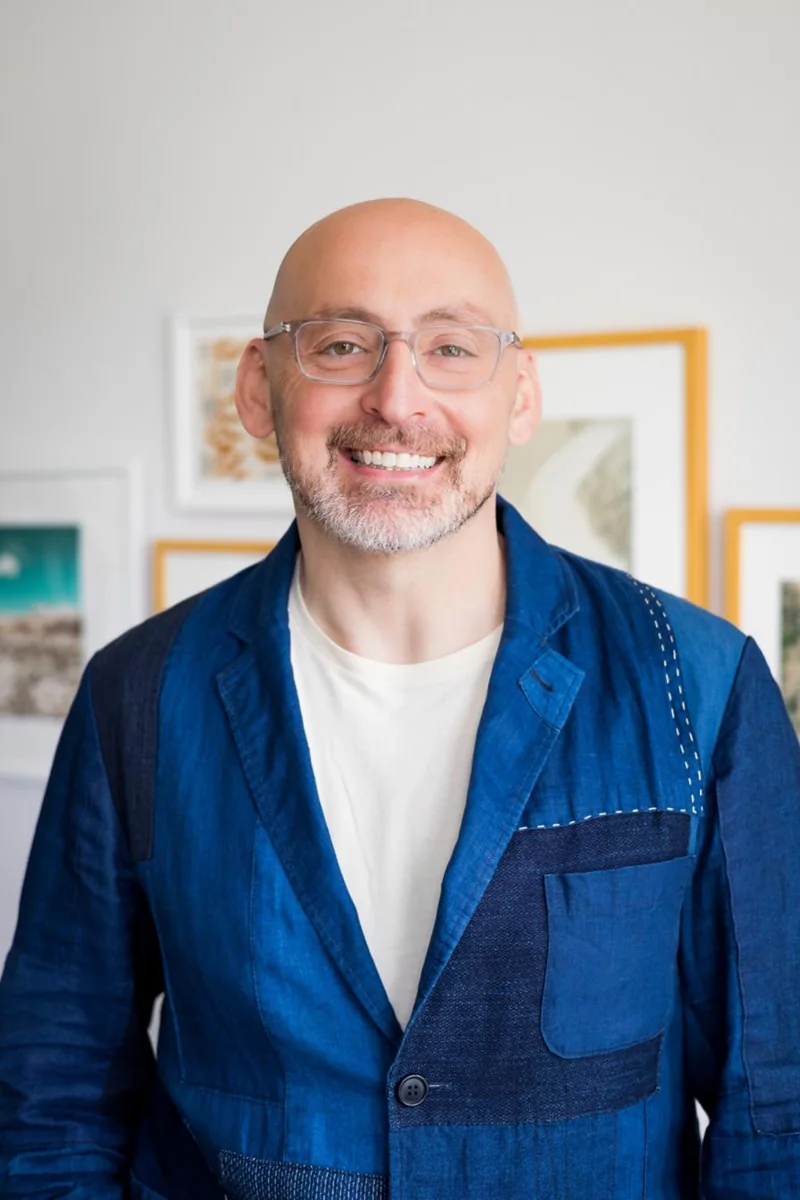
I have worked with grief for deaths, divorces, estrangements, career losses, and the grief for lives not lived. I've found that the willingness to stay in the room with loss — without agenda — is what makes the work meaningful.
Full BiographyOther Areas of Focus
Before you reach out
Not in the way people assume. Grief that wasn't given room at the time it happened will wait. Losses from years or decades ago can be just as alive as recent ones, sometimes more so.
Absolutely. Divorce, estrangement, the end of a relationship, the death of a future you expected — these require mourning too. There is no hierarchy of valid loss.
Unexpressed grief tends to grow heavier over time, not lighter. The relief of being genuinely witnessed typically outweighs the difficulty of contact.
Yes. I accept Stanford Cardinal Care and Aetna. I also accept private pay and can provide a superbill for out-of-network reimbursement. Reimbursement and your out-of-pocket cost depend on your plan’s benefits.
Falling apart in session is not a failure. It is often the beginning of the work. I can be with that.
Not in any way that should decide your choice. The terms are used interchangeably in California. Where a distinction is drawn, counseling suggests shorter, more present-focused support and therapy suggests longer, more depth-oriented work; most grief work moves along that spectrum as it goes, and we decide the pace together rather than in advance.
Yes, and it is common. Grief that had nowhere safe to happen at the time often surfaces much later, when something unrelated opens it. Late grief is not less legitimate and does not need justifying.
Grief Therapy · Palo Alto
You don't have to
carry this alone.
A free 15-minute consultation is a low-pressure first step.
Start a Conversation