Trauma Therapy
in Palo Alto
When the past still shapes the present.
Careful, body-aware trauma counseling that builds safety first — and revisits what was painful only when you're ready.
Free 15-min · In-person Palo Alto or telehealth ·

In therapy, attention can be a form of care. Rather than forcing an explanation, we can stay close to what is present: the body's response, the room, the relationship, and what helps you find more ground.
Trauma work does not require excavation. It requires conditions that support choice, trust, and an honest pace.
Trauma doesn't announce itself. It shows up sideways.
You may not think of yourself as someone with trauma. But some of this might sound familiar:
Certain situations — a tone of voice, a physical sensation, a type of person — activate something in you that seems out of proportion to what's actually happening.
You're hypervigilant in ways you can't fully explain. You scan. You anticipate. You can't fully relax.
There are memories you avoid, or that arrive without warning and take time to recover from.
Intimate relationships trigger responses in you that feel older than the relationship itself.
Your nervous system is running a threat-detection program in situations that aren't actually threatening.
You've built significant distance from certain parts of your history. The distance costs you something.
Trauma can keep shaping
the present.
Trauma can affect how a person feels in their body, responds to closeness, interprets danger, or manages everyday stress. Those responses are real, but they do not mean there is one story or one treatment that fits everyone.
Some people notice activation, shutdown, avoidance, or a reflex to withdraw before they have words for what is happening. Therapy can make room to notice those patterns with more curiosity and choice. Moving too quickly into painful material can be overwhelming for some people, so pacing is something to discuss together.
A workable pace is collaborative: clear enough to be useful, slow enough to stay connected.
Depth-oriented trauma work can begin by building a steadier relational ground: naming what is happening now, returning to what helps, and checking whether the work still feels tolerable. Difficult material is approached by agreement, not by force. The aim is not to make a promise about the past; it is to help the present have more room.
There is no requirement to turn suffering into a lesson. Sometimes the first useful movement is simply being able to describe what is happening and to be met with care.
“The wound is the place where the light enters you.”
— RumiFor some people, what has been avoided becomes easier to bring into view when there is enough trust and support. That is not a demand for optimism or disclosure.
This is the orientation of depth-oriented therapy: not to fix, manage, or optimize — but to understand what has been organized inside, and make contact with it.
Safety first.
Always.
“Start close in. Don't take the second step or the third. Start with the first thing close in, the step you don't want to take.”— David Whyte
My approach is relational, depth-oriented, and body-aware. We begin with your concerns, practical circumstances, and what helps you stay connected. If you are looking for a specialized trauma modality or a different level of care, I will be direct about fit and referral options.

Do you have to tell the story?
No. This is the most common question in a first trauma counseling call, and it deserves a direct answer rather than a reassuring one.
The fear behind the question is usually specific: that therapy means recounting the worst thing that happened to you, in order, out loud, to someone you have just met. Some approaches do involve structured narration — Prolonged Exposure and Cognitive Processing Therapy both work this way, and there is real evidence behind them. That is not what happens here by default.
Depth-oriented and gestalt-informed trauma work starts from present experience instead. In practice that can mean describing what happens in your body when a certain subject comes near, without describing the subject. It can mean noticing that your voice changes when you mention a particular person, and staying with that rather than moving past it. The history often arrives on its own once the conditions are right, and when it does, it tends to arrive in pieces rather than as a narrative.
Processing is not the same as reliving
This distinction does most of the work in trauma counseling, and it is worth being plain about.
Reliving is when the nervous system responds as though the event is happening now, without enough support to register that it is not. Talking in that state does not usually help. For some people it makes things worse, and adds a new experience of being overwhelmed to the ones already there.
Processing is when something from the past becomes available to attention while you stay oriented to the present — the room, your breathing, the fact that there is another person here. Something can be difficult and still be workable, as long as one foot stays in the present.
The difference between the two is not a matter of topic. It is a matter of pace and of support.
Part of my job is watching for the point where one turns into the other, because it is often easier to see from the outside. Speech speeding up or going flat. A sense that you have left the room. Losing the thread of what you were saying. When those show up, we slow down or stop, deliberately, and come back to it another time.
The measure of a useful session is not how much ground was covered. Sessions where we spend fifty minutes establishing that it is possible to approach something and then step back are frequently the ones that make later work possible.
What a diagnosis tells you —
and what it leaves out.
People searching for PTSD treatment in Palo Alto usually mean something specific, and it is worth separating the diagnosis from the experience it is trying to describe.
What PTSD describes
In the DSM-5-TR, post-traumatic stress disorder follows exposure to actual or threatened death, serious injury, or sexual violence, and involves symptoms across four groups persisting more than a month and causing real distress or impairment:
- Intrusion — unwanted memories, nightmares, flashbacks, strong reactions to reminders.
- Avoidance — steering away from reminders, whether external situations or internal thoughts and feelings.
- Changes in thinking and mood — persistent negative beliefs about yourself or the world, self-blame, detachment from others, difficulty feeling positive emotion.
- Changes in arousal — hypervigilance, exaggerated startle, sleep and concentration problems, irritability, recklessness.
The diagnosis is genuinely useful. It supports insurance coverage and treatment planning, and for a lot of people the relief of learning that what they are experiencing has a name and a shape is not small.
Where it fits less well
Many of the people who come to trauma counseling are carrying the consequences of something prolonged rather than singular — childhood neglect, chronic emotional unsafety, a long coercive relationship, growing up responsible for an adult's state of mind. A frame built around a discrete event does not describe that well.
The World Health Organization's ICD-11 recognises complex PTSD, which adds three persistent difficulties to the PTSD picture: regulating emotion, a negative sense of self, and sustaining relationships. The DSM-5-TR does not include it as a separate diagnosis. The distinction matters clinically, because the second kind is less about a specific memory and more about what a person learned, early and thoroughly, about how to be with other people. That is work that tends to happen in the relationship rather than in the retelling — which is where a depth-oriented, relational approach has something to offer.
How I work with this, and when I would refer you elsewhere
My work is relational, depth-oriented and body-aware. I am not trained in EMDR, Prolonged Exposure, or Cognitive Processing Therapy as standalone protocols. Those are well-supported treatments, particularly for single-incident PTSD, and if that is what would serve you best I would rather say so in the free consultation than six months in.
The same holds for anything that needs a different level of care — active suicidality, substance dependence requiring medical support, or symptoms severe enough that weekly outpatient counseling is not the right container. I will be direct about it and help you find the right referral. Being clear about scope early is part of responsible trauma work, not a caveat attached to the end of it.
What becomes possible
when trauma integrates
More room in the present
For some people, memories, triggers, or patterns become easier to notice and respond to with support. The goal is not to erase the past, but to have more choice in the present.
Relationships can feel less narrow
Therapy can offer a place to understand the patterns that emerge around closeness, conflict, distance, and trust—and to try new ways of making contact.
A steadier way to meet stress
People may develop a clearer sense of what helps them ground, rest, ask for support, and respond when they feel overwhelmed. Change is individual and does not follow a fixed timetable.
How to start,
safely.
Free 15-min consultation
Slow, low-pressure. No expectation to go anywhere you're not ready. We just talk and see if this feels right.
First session
An unhurried intake. Your history, what brings you here, how you make sense of things.
Ongoing weekly work
Regular 50-minute sessions, in-person in Palo Alto or via telehealth throughout California.
What the first few months actually involve
Descriptions of trauma therapy tend to stay abstract, which is unhelpful when you are trying to decide whether to make a call. Here is the concrete version.
The consultation
Fifteen minutes, free, by phone or video. You do not need to explain your history. Most of it is practical — what you are looking for, whether the schedule and the insurance work, whether talking to me feels tolerable. People sometimes apologise for not knowing what to say. That is a reasonable state to be in and not a problem to solve before calling.
The first session
Fifty minutes, unhurried. What brings you now rather than a year ago, what you have already tried and how it went, what your life currently asks of you, and what helps you settle when you are not settled. It is not a full trauma history and there is no intake form driving it toward one. If something difficult comes up you are welcome to name it briefly and leave it there.
The first four to six weeks
Mostly this period is about establishing how we work together: learning what your particular signals of too-much look like, building shared language for pacing, and finding out whether this relationship can hold the weight you would eventually want to put on it.
Some people find this stretch frustrating. There is often an urge to get to the material, to be efficient about it, to demonstrate that you can handle it. That urge is usually worth talking about rather than acting on — it is frequently the same reflex that made the original experience harder to metabolise.
After that
It varies more than anyone selling a programme will admit. Depth-oriented trauma counseling is not short-term by design; the work is cumulative and the useful sessions are often unremarkable ones. Some people work weekly for a year or two. Some come for a defined stretch around a particular thing and stop. Twice-weekly is occasionally useful and occasionally too much, and it is a question to think about together rather than a default.
Ending is a real part of the work and something to do on purpose, with notice, rather than by drifting. You can raise it at any point without it being a verdict on the therapy.
Trauma counseling in Palo Alto
and across the peninsula
Sessions take place at A Good Place Therapy on Lytton Avenue in downtown Palo Alto, a short walk from the University Avenue Caltrain station with street and garage parking nearby. In-person clients come from Palo Alto itself and from Menlo Park, Mountain View, Los Altos, Redwood City, Atherton and Sunnyvale.
I also see clients by secure video anywhere in California. For trauma work, telehealth is a real option rather than a lesser one — a number of people find it easier to stay grounded in their own space, and being able to end a session and stay put rather than drive home matters more than it sounds like it would.
Insurance and fees
Yes. I accept Stanford Cardinal Care and Aetna. I also accept private pay and can provide a superbill for out-of-network reimbursement. Reimbursement and your out-of-pocket cost depend on your plan’s benefits.
For other PPO plans I provide superbills for out-of-network reimbursement, and the insurance and fees page sets out what that involves. If cost is the obstacle, say so in the consultation — it is a normal thing to discuss and there is usually more to talk about than the sticker figure.
This is one of the areas I work with in individual therapy.
How individual therapy works →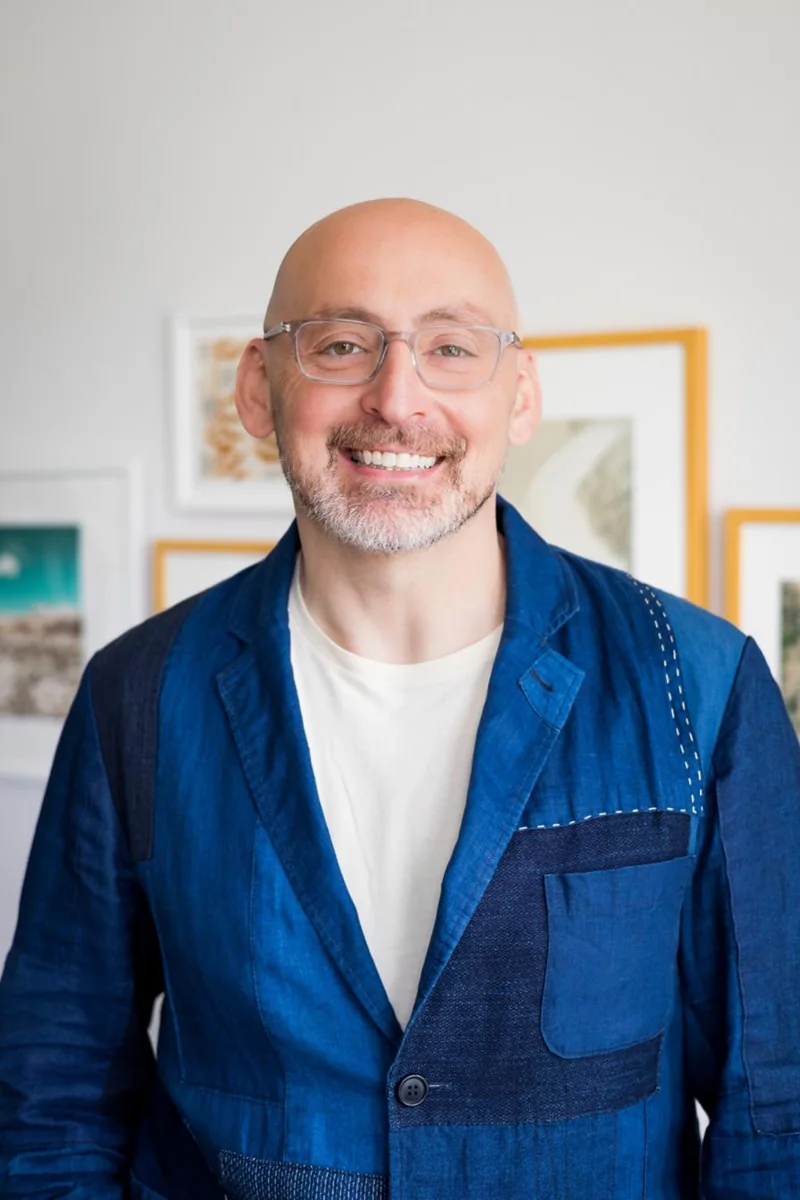
I approach trauma-related concerns with care, clear scope, and a long time horizon. A consultation is a place to ask about fit, pacing, practical access, and whether another kind of support would serve you better.
Full BiographyOther Areas of Focus
Before you reach out
No. Depth-oriented trauma work can proceed without detailed narration of traumatic events. Often, working with the body and the present-moment experience is more useful than reconstructing the story. The history tends to arrive on its own once there is enough trust and support.
No, and the distinction does most of the work in trauma counseling. Reliving is when the nervous system responds as though the event is happening now, without enough support to register that it is not — talking in that state does not usually help. Processing is when something from the past becomes available to attention while you stay oriented to the present. The difference is a matter of pace and support rather than of topic.
Trauma therapy that moves too quickly toward the material often activates the nervous system without resolving it. My approach prioritizes building the relational and somatic foundation first. Slower is often more effective.
My approach is informed by somatic and body-aware methods but is primarily relational and depth-oriented. I am not formally trained in EMDR, Prolonged Exposure, or Cognitive Processing Therapy as standalone protocols. Those are well-supported treatments, particularly for single-incident PTSD, and if one of them would serve you better I will say so in the consultation and help you find it.
PTSD, as described in the DSM-5-TR, follows exposure to a threatening event and involves intrusion, avoidance, negative changes in thinking and mood, and changes in arousal, persisting more than a month. Complex PTSD is recognised in the World Health Organization's ICD-11 and adds three persistent difficulties: regulating emotion, a negative sense of self, and sustaining relationships. It typically follows prolonged or repeated harm rather than a single event. The DSM-5-TR does not include it as a separate diagnosis.
Yes. In-network with Aetna and Stanford Cardinal Care (Wellfleet). Superbills for other PPO plans.
Working with dissociation and overwhelm is part of the work — we don't avoid it, but we also don't push through it. We develop tools for orienting and grounding, and we move at whatever pace your system allows.
Not a meaningful one here. The two terms are used more or less interchangeably in California, and people searching for either are usually looking for the same thing. Where a distinction is sometimes drawn, "counseling" implies shorter and more present-focused work while "therapy" implies longer and more depth-oriented work — but that is a spectrum rather than two services, and where you sit on it is something we would decide together.
As a registered associate working under supervision, I can assess and, with my supervisor, assign a diagnosis where it is clinically appropriate — which is often what allows insurance to cover the work. But a diagnosis is a description of a pattern, not an explanation of you, and it is not a prerequisite for beginning. Plenty of people benefit from trauma counseling without ever meeting full PTSD criteria.
It varies, and anyone offering a confident number without having met you is guessing. Depth-oriented work is generally measured in months to years rather than weeks, and the first four to six weeks are largely about establishing pace and trust. We can review how it is going at any point, and stopping is always available to you.
Yes, and for some people it works better. Being in your own space can make it easier to stay grounded, and not having to drive somewhere afterwards matters more than it sounds like it would. I see clients by secure video throughout California, and the Palo Alto office is there for people who would rather meet in person.
Trauma Therapy · Palo Alto
Begin with a
real conversation.
A free 15-minute consultation is a good first step — no commitment.
Start a Conversation