In-depth psychotherapy
for Sunnyvale
Travel time depends on traffic, transit schedules and your starting point. Sessions are at 667 Lytton Ave, Suite #9, Palo Alto. Check your current route and posted parking restrictions before traveling. Online sessions are an option for clients located in California.
Open-ended, depth-oriented therapy at 667 Lytton Avenue in downtown Palo Alto — for people in Sunnyvale who want to understand a pattern rather than manage a symptom.
Free 15-minute consultation · 667 Lytton Ave, Suite #9
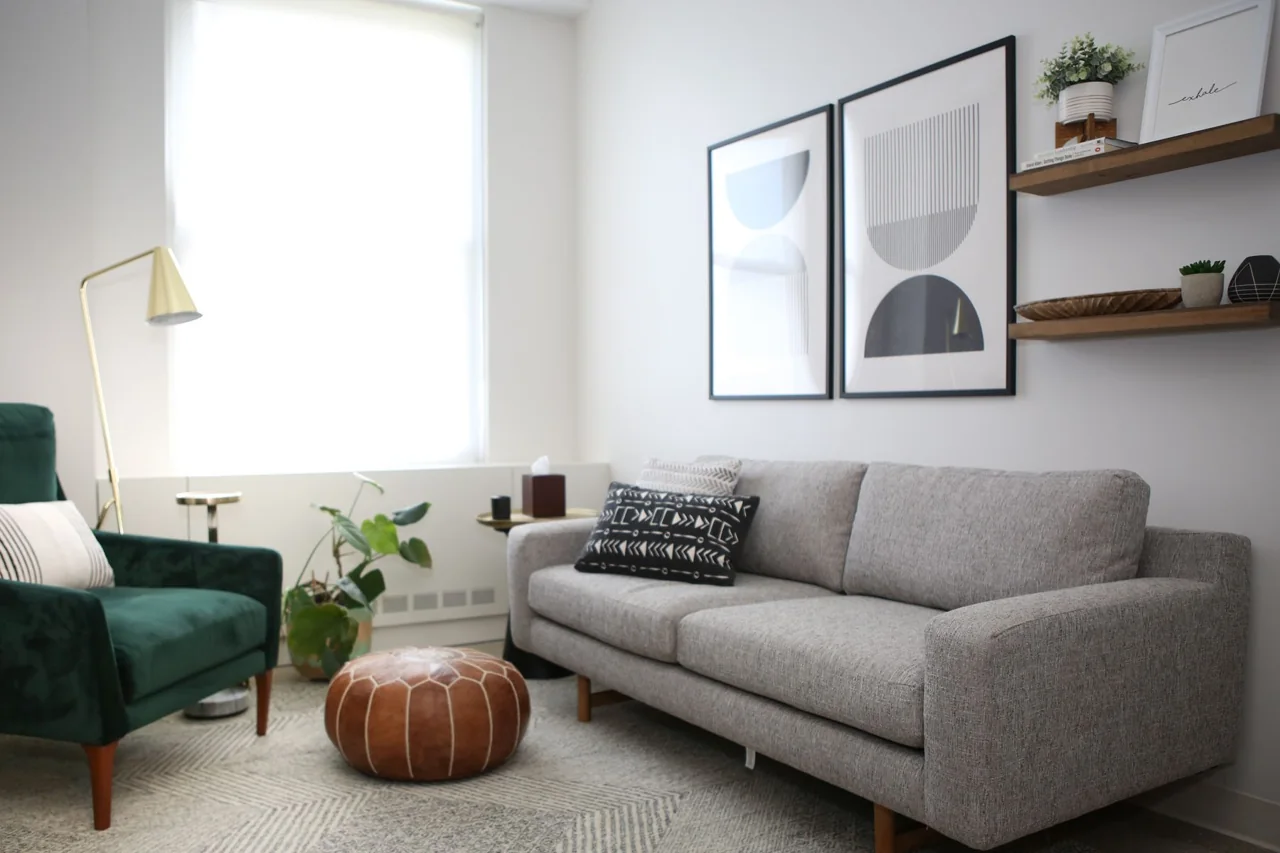
What “in-depth” actually means
People who search for in-depth therapy rather than just therapy usually have something specific in mind, and it is worth answering directly rather than treating it as a stylistic preference.
Most therapy available now is short and structured. Six or eight sessions, a defined problem, tools to manage it. That is a real intervention and for a bounded difficulty it works well — a decision you cannot make, a specific fear, one bad stretch with a clear beginning.
In-depth psychotherapy is a different instrument. It assumes that some of what you are dealing with is not a problem of information or technique, and that this is why knowing about it has not helped. You can already narrate the pattern accurately. You can predict when it will happen. And it happens anyway, which is itself the diagnostic clue: if insight alone were sufficient, it would have resolved years ago.
Depth work is less about learning something new and more about coming into contact with something already there.
In practice that means paying attention to what happens in the room — how you go quiet at a particular kind of question, what your body does when a subject comes near, what gets organised between the two of us that also gets organised elsewhere in your life. Those patterns are more available in a relationship than in a worksheet, which is why the work is open-ended and why it is weekly.
Different approaches suit different needs. A consultation can help you explore whether this approach fits or whether another service would be more appropriate.
The commute decides whether week thirty happens
Open-ended therapy is a weekly commitment held across a long stretch, and it is decided far more often by logistics than by motivation. The weeks that matter most are usually the ones you least want to attend, and on those weeks every added obstacle counts double.
Travel time depends on traffic, transit schedules and your starting point. Sessions are at 667 Lytton Ave, Suite #9, Palo Alto. Check your current route and posted parking restrictions before traveling. Online sessions are an option for clients located in California.
Travel time depends on traffic, transit schedules and your starting point. Sessions are at 667 Lytton Ave, Suite #9, Palo Alto. Check your current route and posted parking restrictions before traveling. Online sessions are an option for clients located in California.
Early-morning and evening slots exist for exactly this reason.
Competent, functioning, and somewhere else
Sunnyvale is dense with people doing demanding technical work, and with families holding two careers and a mortgage in one of the most expensive places in the country. Two patterns arrive more than any others.
The first is a long flatness with no crisis attached to it. Work is fine. The relationship is fine. Nothing is identifiably wrong, and there is a persistent sense of watching your own life from slightly outside it. This is one of the most under-treated things I see, precisely because there is no obvious moment at which a reasonable person would seek help. It gets managed instead — optimised, scheduled around, waited out — often for years.
The second is what happens when a pattern that made sense in one context stops working in another. Someone raised to be useful, reliable and undemanding builds a life on that, and then finds in their thirties or forties that they cannot locate what they actually want, or that their marriage has quietly become an arrangement between two functions rather than two people. That is not a communication-skills problem, and it does not respond to being explained more clearly.
People also come here carrying things from much earlier that they have never had anywhere to put: a childhood organised around someone else’s state of mind, an immigration that cost more than it was allowed to cost, a loss that was absorbed rather than grieved because there was no time. Trauma counseling and depression therapy are both areas I work in, and in practice the categories blur.
667 Lytton Avenue, Suite #9
Downtown Palo Alto, a couple of blocks off University Avenue.
Travel time depends on traffic, transit schedules and your starting point. Sessions are at 667 Lytton Ave, Suite #9, Palo Alto. Check your current route and posted parking restrictions before traveling. Online sessions are an option for clients located in California.
By car. El Camino Real is the direct route; Central Expressway to Alma is often quicker outside peak, and 101 to Embarcadero works when the expressways are slow. Downtown has time-limited street parking and public garages a short walk away — if you are coming weekly, settle on a garage early rather than circling.
Video sessions are available anywhere in California, which matters most in the weeks that get away from you.
Before you reach out
Mostly duration, orientation and what is assumed to be causing the trouble. Short structured therapy treats a defined problem with tools over a set number of sessions. In-depth psychotherapy is open-ended and works with patterns that have been running far longer than the presenting difficulty, on the assumption that they persist for reasons insight alone does not reach. Neither is better in the abstract. They are built for different jobs.
Travel time depends on traffic, transit schedules and your starting point. Sessions are at 667 Lytton Ave, Suite #9, Palo Alto. Check your current route and posted parking restrictions before traveling. Online sessions are an option for clients located in California.
Ask about current morning, daytime or evening appointments. Availability changes; online sessions may also be an option for clients located in California.
Open-ended genuinely means open-ended. Many people work weekly for a year or more; some come for a defined stretch around a particular thing and stop. We review how it is going together as we go, rather than against a number set before we had met. Stopping is always available to you.
An EAP is a useful thing built for a specific job: a small number of sessions, quickly available, for something bounded. It is a different tool from open-ended depth work. If the second is what you want, it is better to know that at the start than to discover it when the sessions run out.
In-network with Aetna and Stanford’s Cardinal Care plan (administered by Wellfleet). For other PPO plans I provide superbills, and there is a page here explaining out-of-network reimbursement and what to ask your insurer.
Yes, anywhere in California, and some people work entirely that way. For this distance I would still suggest trying the room first if you can — depth work often turns on things that are easier to notice in person.
No. Therapy notes are protected health information. They are not shared with your employer or with immigration authorities. The narrow legal exceptions apply to every licensed and registered therapist in California and I will explain them fully in the first session.
A free fifteen-minute call. No form, no history to prepare.